
The History of Cyberware
Cyberware was created as the next logical step to medical prostheses. Replacing missing limbs, replacing organs, and augmenting the spine as a result of body trauma led to the development of not only replacements for these different parts of the human anatomy, but also improvements.
R&D on cyberware was further accelerated when many veterans of the First Central American War returned home injured, many times missing limbs. The crude replacements developed were not the most robust and functional, and lacked designs that integrated well into the human body. In 2077, these are referred to as generation zero augmentations and virtually no one uses this type of Cyberware.
Cyberware Generations (1-4)
Iterating upon the first forms of cyberware were generation one implants; early combat, and industrial augmentations. Industrial implants like lung filters were created for laborers who worked in polluted environments, and more combat-centric cybernetics were created in response to the Second Central American War and the second and third corporate wars. This led to an augmentation arms race to develop the best enhancements to give troops on the battlefield the upper hand, as many megacorporations looked to capture the market.

The 2nd Central American War was the catalyst for Generation 1 implants
Militech found early success in this department, with their troops dominating the battlefields in war. In 2077 these generation 1 implants, are mainly made of metal and plastic and can only really be seen on the black market or in the hands of the poor.
The corporations who had participated in the corporate wars started to see the profit potential of Cyberware and related technologies, and many started expanding their offerings to include medical implants for veterans as well as the first commercial, mass-market cybernetics, leading to Generation 2 cyberware.
During this time Anti-rejection treatments were developed, the style of kitsch became popular and braindance technology saw a massive uptick all leading to cyberware creating a captive audience. Federally unregulated, cyberweapons were also developed. Gen 2 implants are the most common on Night City’s streets in 2077. They have more robust cyber muscles, with much greater strength potential making them desirable in combination with RealSkinn technology, a layer of synthetic skin that looks almost identical to the real thing.
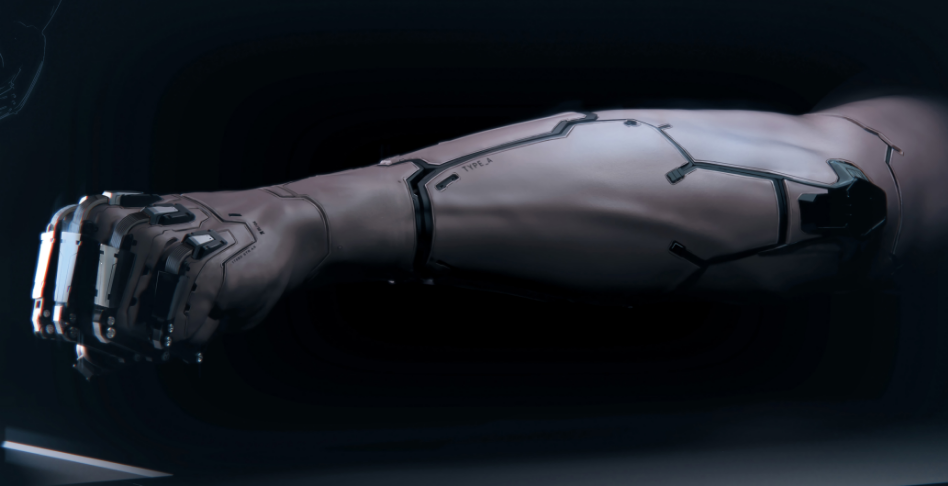
RealSkinn in combination with Cyberpunk 2077’s Gorilla Arm augmentations
Generation 3 cyberware’s development coincided with the growth of the megacorporations. With megacorporations using increased force with one another, their security divisions and armies needed the best of the best chrome to use as a deterrent for other companies to encroach on their territory. Subdermal armors and retractable weapons became more prolific, and on a more micro level bioware such as skinweaves, nano surgeons and toxin binders became more popular. There are some major perks to bioware and nanotechnology which include immunity to EMPs, being undetectable and typically leading to less of a humanity hit than their cyberware counterparts.
Combining cyberware and bioware became the modus operandi for high up corporate security, agents, and soldiers. Generation 3 saw cyberware creep into all industries in some form or another, from yes a military perspective, but also in entertainment, medicine, family life, fashion, and even sex.
The latest and greatest Cyberware is the current top echelon of chrome, known as Generation 4.
First is mainly for the top-corpos including the latest cyber eyes, netrunning gear, and neural processors, to maintain a competitive edge.
The second type is mainly as a response to the social elite and their demands to stand out from everyone else. Braindance stars, singers, and celebrities embrace gold and platinum cyberware, limbs made of pure crystal, and augmentations featuring rare natural woods worth thousands of eddies.
Custom and bespoke gear makes one stand out in the jungle of Night City, where making a statement also means demanding respect.

Arasaka Mantis Blades customized with fragments to change the damage type
Off the shelf implants are known as “shelfware” and are many times bare-bones options. Custom tuned and tailored gear is preferred for most edgerunners and professionals.
Lite implants can be installed in a fairly routine manner, but more complicated cyberware needs a specialist known as a ripper doc. Full body replacement and even more complex operations can only be performed in specialist clinics and are highly dangerous. All these modern implants have the same tech foundations, each compatible with each other and the users nervous system.